More Than Bones: Connecting with Humanity Through Science
This past weekend, I was with a friend mulling over whether or not I wanted to partner again with the local business district to host community bone labs during the city’s Summer Streets events. They’re always fun, but if I’m honest, they aren’t my favorite way to engage. I realized I’d prefer to work with adults or host full workshops somewhere. Inevitably, my friend asked the question that I have been asked many times.
When people hear that I host forensic anthropology workshops for children, their first question is often: “How do you teach death to kids?“
The short answer is — I don’t.

The workshops I develop for kids and families aren’t focused on death. I focus on life. The human skeleton is not just a set of bones or data points. I’m helping them discover the amazing stories our bones can tell about our lives.
Every bump, curve, and line in our skeleton holds a record of the lives we live: the sports we played, the illnesses we survived, the places we called home, the foods we ate, and how we grew.
When I introduce forensic anthropology to young learners, I help them see the skeleton as a living history. Together, we explore how bones can tell us someone’s age, height, and sometimes even clues about their hobbies, health, and community.
Rather than centering loss, we center curiosity, respect, and discovery.
I also have very strict rules about how I discuss death with youth and include certain types of topics and pathologies in the cases that I develop. (Note to self: I think I’ve written about my personal rules and guidelines before — I’ll have to dig it up!)
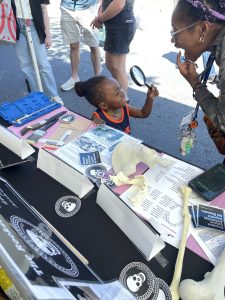
Additionally, my workshops are purposefully and beautifully interdisciplinary and hands-on. We use archival documents and artifacts to help construct a period of time or place. We review art, textile, construction, neighborhood, and more. They pick up the bone casts and hold them to their bodies in attempts to understand their own. After we discuss dental growth, they love running up to me and holding their mouths open so I can see their teeth and have me guess their ages (even though I always chuckle a bit because typically they are only within a year or two of each other, but are still fascinated).
Children are natural investigators. They love solving mysteries and understanding the world around them. By focusing on the living stories hidden in our bones, I help them see science as something exciting, human, and full of wonder — not something dark or scary.
In doing so, we build not only scientific literacy, but empathy, respect for diverse life experiences, and a deep sense of connection to humanity.
For me, forensic anthropology isn’t about teaching death — it’s about honoring life, using science, culture, context, and conversation to reexamine the world we inhabit every day.
So next time you hear “forensic anthropology for kids,” don’t picture your favorite crime show. Picture a room full of curious young scientists, piecing together the beautiful puzzle of life.
